Next Treatments
Back to Eczema

baricitinib

Sold as Olumiant for other conditions

TypePill StageStopped · Phase 3 Why it stoppedRegulatory issue · Eli Lilly and Company · Jun 13, 2022“Terminated due to lack of alignment during regulatory negotiations.” (NCT03559270) Latest updateMay 22, 2026Phase 3 study completed
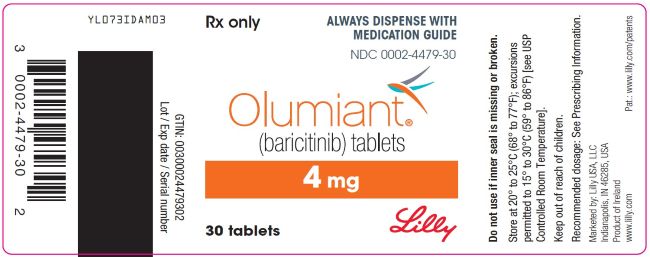
Picture from the US label: Rx Only Always Dispense with Medication Guide NDC 0002-4479-30 Olumiant ® (baricitinib) tablets 4 mg 30 tablets Lilly
From the labelA picture from the US label, as DailyMed publishes it.

What stands out

  • Blocks JAK enzymes, decreasing the activity of the immune system
Derived from US label · MedlinePlus: Abrocitinib · This is a summary of public records for informational purposes only. It is not medical advice.

Results

Trial: BREEZE-AD5
Clear or almost clear skinAfter 16 weeks
Placebo147 people
5 in 100
1 mg Baricitinib147 people
13 in 100
2 mg Baricitinib146 people
24 in 100
02040
2.5×
the odds of reaching clear or almost clear skin with 1 mg Baricitinib vs. placebo.
The sponsor’s 95% confidence range is 1.1× to 5.8×.
5.3×
the odds of reaching clear or almost clear skin with 2 mg Baricitinib vs. placebo.
The sponsor’s 95% confidence range is 2.4× to 12×.
Eczema score (EASI) at least 75% betterAfter 16 weeks
Placebo147 people
8 in 100
2 mg Baricitinib146 people
30 in 100
02040
4.6×
the odds of an eczema score at least 75% better with baricitinib vs. placebo.
The sponsor’s 95% confidence range is 2.3× to 9.2×.
Eczema score (EASI) at least 90% betterAfter 16 weeks
Placebo147 people
3 in 100
1 mg Baricitinib147 people
8 in 100
2 mg Baricitinib146 people
21 in 100
02040
2.2×
the odds of an eczema score at least 90% better with 1 mg Baricitinib vs. placebo.
The sponsor’s 95% confidence range is 0.79× to 6.3×. It takes in 1×, where the drug and placebo are the same.
6.7×
the odds of an eczema score at least 90% better with 2 mg Baricitinib vs. placebo.
The sponsor’s 95% confidence range is 2.6× to 17×.
NCT03435081 · Ages 18+ · Results posted Jan 2021 · This is a summary of trial data for informational purposes only. It is not medical advice.
Trial: BREEZE-AD5
Itch score at least 4 points betterAfter 16 weeks
Placebo123 people
6 in 100
1 mg Baricitinib132 people
16 in 100
2 mg Baricitinib131 people
25 in 100
02040
3.1×
the odds of an itch score at least 4 points better with 1 mg Baricitinib vs. placebo.
The sponsor’s 95% confidence range is 1.3× to 7.4×.
5.3×
the odds of an itch score at least 4 points better with 2 mg Baricitinib vs. placebo.
The sponsor’s 95% confidence range is 2.3× to 12×.
NCT03435081 · Ages 18+ · Results posted Jan 2021 · This is a summary of trial data for informational purposes only. It is not medical advice.
What is IGA?
  • IGA stands for Investigator's Global Assessment.
  • The IGA measures the investigator's global assessment of the participant's overall severity of their AD, based on a static, numeric 5-point scale from 0 (clear skin) to 4 (severe disease). The score is based on an overall assessment of the degree of erythema, papulation/induration, oozing/crusting, and lichenification.As this trial registered it · NCT03435081
What is EASI?
  • EASI stands for Eczema Area and Severity Index.
  • The EASI assesses objective physician estimates of 2 dimensions of atopic dermatitis - disease extent and clinical signs affected: 0 = 0%; 1 = 1-9%; 2 = 10-29%; 3 = 30-49%; 4 = 50-69%; 5 = 70-89%; 6 = 90-100% and the severity of 4 clinical signs: (1) erythema, (2) edema/papulation, (3) excoriation, and (4) lichenification each on a scale of 0 to 3 (0 = none, absent; 1 = mild; 2 = moderate; 3 = severe) at 4 body…As this trial registered it · NCT03435081 (the full definition is there)
What is the itch score?
  • NRS stands for Numeric Rating Scale.
  • The Itch NRS is a patient-administered, 11-point horizontal scale anchored at 0 and 10, with 0 representing "no itch" and 10 representing "worst itch imaginable." Overall severity of a participant's itching is indicated by selecting the number, using a daily diary, that best describes the worst level of itching in the past 24 hours.As this trial registered it · NCT03435081
Why this trial?

Of baricitinib’s 5 trials with posted results, BREEZE-AD5 is shown first: of the trials that compared the drug with placebo on a result this page charts, it tested the drug on its own, in people with eczema generally. We rank those trials by whether they set out to measure skin clearing, whether they tested the drug on its own, their phase, whether they were randomised, whether they included adults, whether they ran in the US, how many doses they tested, how many US sites they had, their size, and then how recently they finished.

All 5 baricitinib trials
PostedTrialPhaseAgesPeople
Jun 2023BREEZE-AD-PEDSPhase 32–17516
Nov 2022BREEZE-AD6Phase 318+374
Jul 2022BREEZE-AD3Phase 318+1,645
Jan 2021BREEZE-AD5 Shown abovePhase 318+440
Jan 2021BREEZE-AD4Phase 318+463

Side effects

Boxed warning

Serious infections, mortality, malignancy, major adverse cardiovascular events (MACE), and thrombosis

On baricitinib’s label for rheumatoid arthritis, COVID-19 and alopecia areata.

The warning in full

WARNING: SERIOUS INFECTIONS, MORTALITY, MALIGNANCY, MAJOR ADVERSE CARDIOVASCULAR EVENTS (MACE), and THROMBOSIS See full prescribing information for complete boxed warning. Increased risk of serious bacterial, fungal, viral and opportunistic infections leading to hospitalization or death, including tuberculosis (TB). Interrupt treatment with OLUMIANT if serious infection occurs until the infection is controlled. OLUMIANT should not be given to patients with active tuberculosis. Test for latent TB before and during therapy, except for COVID-19; treat latent TB prior to use. Monitor all patients for active TB during treatment, even patients with initial negative, latent TB test. ( 5.1 ) Higher rate of all-cause mortality, including sudden cardiovascular death with another Janus kinase inhibitor (JAK) vs. TNF blockers in rheumatoid arthritis (RA) patients. ( 5.2 ) Malignancies have occurred in patients treated with OLUMIANT. Higher rate of lymphomas and lung cancers with another JAK inhibitor vs. TNF blockers in RA patients. ( 5.3 ) Higher rate of MACE (defined as cardiovascular death, myocardial infarction, and stroke) with another JAK inhibitor vs. TNF blockers in RA patients. ( 5.4 ) Thrombosis has occurred in patients treated with OLUMIANT. Increased incidence of pulmonary embolism, venous and arterial thrombosis with another JAK inhibitor vs. TNF blockers. ( 5.5 ) SERIOUS INFECTIONS Patients treated with OLUMIANT are at risk for developing serious infections that may lead to hospitalization or death [see Warnings and Precautions ( 5.1 ) and Adverse Reactions ( 6.1 )] . Most patients with rheumatoid arthritis who developed these infections were taking concomitant immunosuppressants such as methotrexate or corticosteroids. If a serious infection develops, interrupt OLUMIANT until the infection is controlled. Reported infections include: Active tuberculosis, which may present with pulmonary or extrapulmonary disease. OLUMIANT should not be given to patients with active tuberculosis. Patients, except those with COVID-19, should be tested for latent tuberculosis before initiating OLUMIANT and during therapy. If positive, start treatment for latent infection prior to OLUMIANT use. Invasive fungal infections, including candidiasis and pneumocystosis. Patients with invasive fungal infections may present with disseminated, rather than localized, disease. Bacterial, viral, and other infections due to opportunistic pathogens. The risks and benefits of treatment with OLUMIANT should be carefully considered prior to initiating therapy in patients with chronic or recurrent infection. Patients should be closely monitored for the development of signs and symptoms of infection during and after treatment with OLUMIANT including the possible development of tuberculosis in patients who tested negative for latent tuberculosis infection prior to initiating therapy [see Warnings and Precautions ( 5.1 )]. MORTALITY In a large, randomized, postmarketing safety study in rheumatoid arthritis (RA) patients 50 years of age and older with at least one cardiovascular risk factor comparing another Janus kinase (JAK) inhibitor to tumor necrosis factor (TNF) blockers, a higher rate of all-cause mortality, including sudden cardiovascular death, was observed with the JAK inhibitor [see Warnings and Precautions ( 5.2 )]. MALIGNANCIES Lymphoma and other malignancies have been observed in patients treated with OLUMIANT. In RA patients treated with another JAK inhibitor, a higher rate of malignancies (excluding non-melanoma skin cancer (NMSC)) was observed when compared with TNF blockers. Patients who are current or past smokers are at additional increased risk [see Warnings and Precautions ( 5.3 )]. MAJOR ADVERSE CARDIOVASCULAR EVENTS In RA patients 50 years of age and older with at least one cardiovascular risk factor treated with another JAK inhibitor, a higher rate of major adverse cardiovascular events (MACE) (defined as cardiovascular death, myocardial infarction, and stroke) was observed when compared with TNF blockers. Patients who are current or past smokers are at additional increased risk. Discontinue OLUMIANT in patients that have experienced a myocardial infarction or stroke [see Warnings and Precautions ( 5.4 )]. THROMBOSIS Thrombosis, including deep venous thrombosis and pulmonary embolism, has been observed at an increased incidence in patients treated with OLUMIANT compared to placebo. In addition, there were cases of arterial thrombosis. Many of these adverse events were serious and some resulted in death. In RA patients 50 years of age and older with at least one cardiovascular risk factor treated with another JAK inhibitor, a higher rate of thrombosis was observed when compared with TNF blockers. Avoid OLUMIANT in patients at risk. Patients with symptoms of thrombosis should discontinue OLUMIANT and be promptly evaluated. [see Warnings and Precautions ( 5.5 )].

Source: FDA label dated Jun 30, 2026.
History

Earliest recorded event: Feb 20, 2018. This timeline shows events collected by Eczema Radar and may not include the treatment’s full history. Study details reflect the latest registry record available here.

  • May 22, 2026Phase 3 trial completedA Study of Baricitinib (LY3009104) in Children and Adolescents With Atopic Dermatitis ClinicalTrials.gov NCT03952559
  • Dec 4, 2025Phase 1 trial postedEvaluating the Safety and Tolerability of Baricitinib in Patients With Job Syndrome With Lupus-Like Disease and/or Atopic Dermatitis ClinicalTrials.gov NCT07262983
  • Jul 12, 2023Phase 3 trial completedA Study of Long-term Baricitinib (LY3009104) Therapy in Atopic Dermatitis ClinicalTrials.gov NCT03334435
  • Jun 29, 2023Phase 3 results postedA Study of Baricitinib (LY3009104) in Children and Adolescents With Atopic Dermatitis ClinicalTrials.gov NCT03952559
  • Apr 20, 2023Phase 3 trial completedA Long-term Study of Baricitinib (LY3009104) With Topical Corticosteroids in Adults With Moderate to Severe Atopic Dermatitis That Are Not Controlled With Cyclosporine or for Those Who Cannot Take Oral Cyclosporine Because it is Not Medically Advisable ClinicalTrials.gov NCT03428100
  • Nov 8, 2022Phase 3 results posted · Trial stopped earlyA Study of Baricitinib (LY3009104) in Participants With Moderate to Severe Atopic Dermatitis Why it stopped: Terminated due to lack of alignment during regulatory negotiations. ClinicalTrials.gov NCT03559270
  • Jul 1, 2022Phase 3 results postedA Study of Long-term Baricitinib (LY3009104) Therapy in Atopic Dermatitis ClinicalTrials.gov NCT03334435
  • Jun 13, 2022Trial stopped earlyReason: Terminated due to lack of alignment during regulatory negotiations. ClinicalTrials.gov NCT03559270
  • Jun 13, 2022New use approvedFDA approved a new use or patient group (efficacy supplement 7). FDA approval letter
  • May 10, 2022New use approvedFDA approved a new use or patient group (efficacy supplement 6). FDA approval letter
  • Apr 24, 2022Phase 3 main data collectedA Study of Baricitinib (LY3009104) in Children and Adolescents With Atopic Dermatitis ClinicalTrials.gov NCT03952559
  • Oct 14, 2021Phase 3 main data collected · Trial stopped earlyA Study of Baricitinib (LY3009104) in Participants With Moderate to Severe Atopic Dermatitis Why it stopped: Terminated due to lack of alignment during regulatory negotiations. ClinicalTrials.gov NCT03559270
  • Aug 16, 2021Phase 3 trial completedA Study of Baricitinib (LY3009104) in Adult Participants With Moderate to Severe Atopic Dermatitis ClinicalTrials.gov NCT03435081
  • Jan 25, 2021Phase 3 results postedA Study of Baricitinib (LY3009104) in Adult Participants With Moderate to Severe Atopic Dermatitis ClinicalTrials.gov NCT03435081
  • Jan 19, 2021Phase 3 results postedA Long-term Study of Baricitinib (LY3009104) With Topical Corticosteroids in Adults With Moderate to Severe Atopic Dermatitis That Are Not Controlled With Cyclosporine or for Those Who Cannot Take Oral Cyclosporine Because it is Not Medically Advisable ClinicalTrials.gov NCT03428100
  • Sep 21, 2020Phase 3 main data collectedA Study of Long-term Baricitinib (LY3009104) Therapy in Atopic Dermatitis ClinicalTrials.gov NCT03334435
  • Dec 9, 2019Phase 3 main data collectedA Study of Baricitinib (LY3009104) in Adult Participants With Moderate to Severe Atopic Dermatitis ClinicalTrials.gov NCT03435081
  • Nov 25, 2019Phase 3 main data collectedA Long-term Study of Baricitinib (LY3009104) With Topical Corticosteroids in Adults With Moderate to Severe Atopic Dermatitis That Are Not Controlled With Cyclosporine or for Those Who Cannot Take Oral Cyclosporine Because it is Not Medically Advisable ClinicalTrials.gov NCT03428100
  • Oct 8, 2019New use approvedFDA approved a new use or patient group (efficacy supplement 1). FDA approval letter
  • May 24, 2019Phase 3 trial startedA Study of Baricitinib (LY3009104) in Children and Adolescents With Atopic Dermatitis ClinicalTrials.gov NCT03952559
  • May 31, 2018First FDA approvalFirst FDA approval of the drug (not for eczema). FDA approval letter
  • May 15, 2018Phase 3 trial startedA Long-term Study of Baricitinib (LY3009104) With Topical Corticosteroids in Adults With Moderate to Severe Atopic Dermatitis That Are Not Controlled With Cyclosporine or for Those Who Cannot Take Oral Cyclosporine Because it is Not Medically Advisable ClinicalTrials.gov NCT03428100
  • Mar 28, 2018Phase 3 trial startedA Study of Long-term Baricitinib (LY3009104) Therapy in Atopic Dermatitis ClinicalTrials.gov NCT03334435
  • Feb 20, 2018Phase 3 trial startedA Study of Baricitinib (LY3009104) in Adult Participants With Moderate to Severe Atopic Dermatitis ClinicalTrials.gov NCT03435081

Sources

From the FDA
Trials
For patients